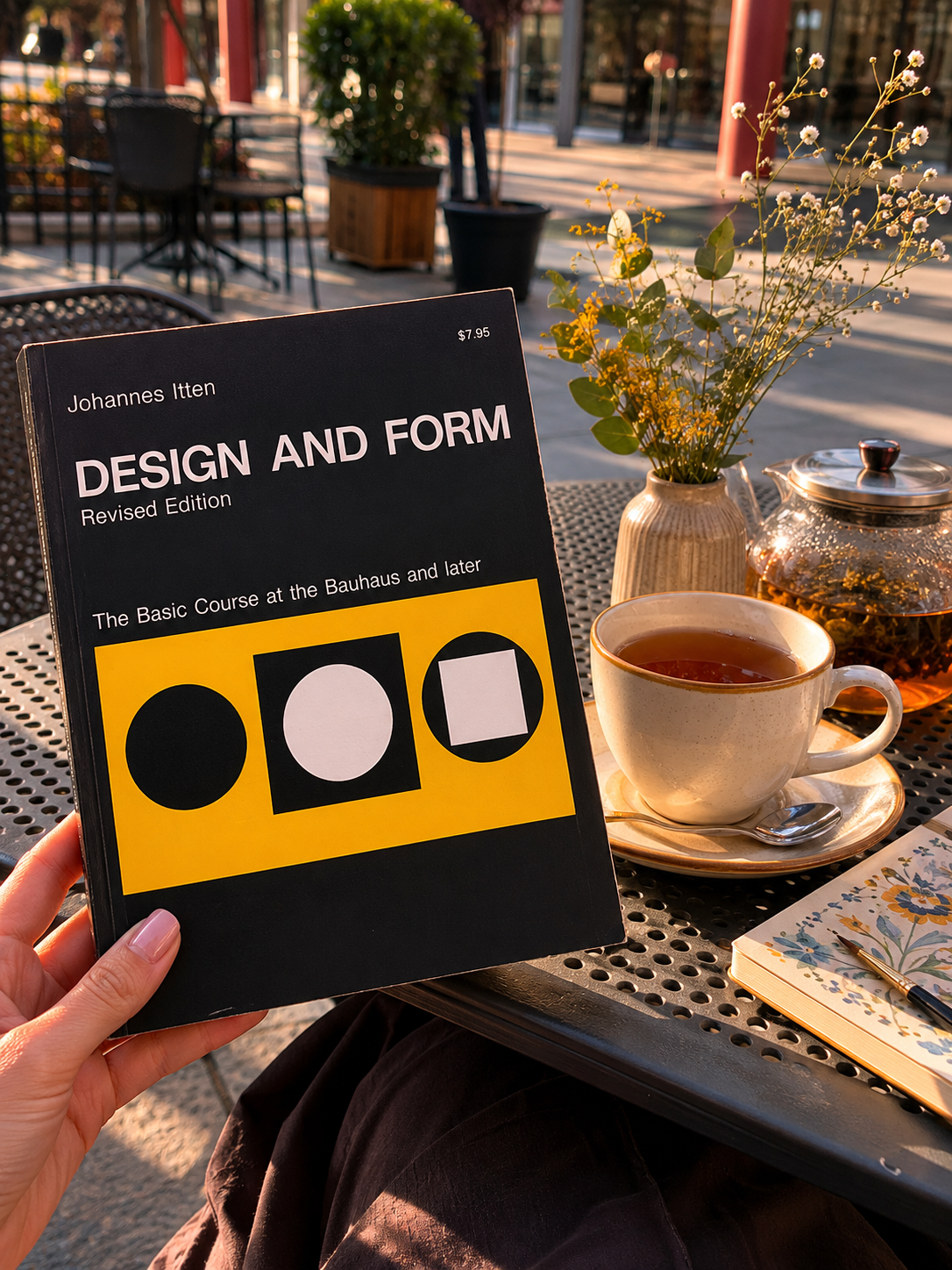
The surprising part is that I had never studied Itten before.
My educational influences came from a different tradition. I was inspired by educators such as Vasyl Sukhomlynsky and Janusz Korczak, who believed in respecting the individuality of every child and creating learning environments where curiosity, creativity, and personal growth could flourish.
When I started teaching art to children and adults, I quickly realised that people come to creative workshops for much more than technical skills.
They come for self-expression.
They come for a space where mistakes are allowed.
They come for the joy of creating something with their own hands.
They come to reconnect with themselves.
That is why my classes are rarely focused on copying the teacher's work step by step. Instead, I encourage participants to explore materials, experiment with colour and form, and discover their own visual language.
While reading Itten, I found a similar philosophy. For him, art education was not simply about mastering techniques. It was about developing perception, sensitivity, imagination, and personal expression.
Today, through watercolour, traditional Ukrainian decorative painting, and creative workshops, I see how art can serve purposes far beyond learning how to draw.
Art helps people slow down.
It creates moments of presence.
It allows emotions to surface safely.
It strengthens cultural identity and a sense of belonging.
It reminds us that every person is capable of creating something unique.
This has become especially meaningful in my work with people from different countries and backgrounds. Whether someone is a child, an expat, a refugee, or a local resident, the creative process often becomes a bridge — connecting people to themselves, to others, and to their own stories.
Perhaps this is why art education remains so relevant in our rapidly changing digital world.
Not because everyone needs to become an artist.
But because creativity helps us become more fully human.
Looking back, I find it fascinating that I arrived at many of these ideas intuitively, only to discover later that educators and artists such as Johannes Itten had explored similar paths nearly a century ago.
Sometimes we do not follow a method.
Sometimes we simply follow experience, observation, and a genuine belief in people's creative potential — and eventually find ourselves standing beside those who walked the path before us.
In the end, the most important lesson is simple:
Art education is not primarily about art.
It is about people.